
Asarai Red Clay Mask Review 2026: Worth Buying?
The Asarai Red Clay Mask keeps showing up on Instagram, TikTok, and in group chats. People call it the mask that made them wear less foundation. That is a bold promise for a tube of clay.
I tested it for a full month to see if the hype holds up in 2026. I tracked my pores, my texture, my breakouts, and my wallet.
This review covers the unboxing, the formula, the results, and the parts nobody mentions in their glowing video. I also list three cheaper masks that do a similar job. Read on before you spend $56 on a tube.
In a Nutshell:
- It does not dry out your skin. Most clay masks crack and tighten. This one stays soft and creamy for the full 10 minutes, which is the single biggest reason people repurchase it.
- Brightening is the strongest benefit. Kakadu plum delivers plant based vitamin C, and my skin looked noticeably fresher within about 20 minutes of rinsing. The glow lasted roughly a day.
- Pore results are real but modest. My pores looked smaller and cleaner after two weeks. They did not disappear, and no clay mask can shrink pore size permanently.
- The price hurts. One tube costs around $56 at full price on the official site, which puts it far above drugstore clay masks that use similar clays.
- It is not a treatment for acne, melasma, or deep wrinkles. Asarai markets brightening and detox, and that is honestly where the formula stops.
- Sensitive skin usually tolerates it well. Aloe sits first on the ingredient list. Still, a minority of buyers report small bumps after repeat use, so patch test first.
What Is the Asarai Red Clay Mask?

- Clean & Refreshing Skin – Gently cleanses your skin, removing surface impurities while leaving it feeling refreshed and smooth. Ideal for your weekly skincare routine.
- Absorbs Excess Oil – Helps control excess oil and shine, providing a balanced and comfortable skin feel throughout the day.
Last update on 2026-08-24 / Affiliate links / Images from Amazon Product Advertising API Some of the links on this website are affiliate links, which means that at no additional cost to you, I earn a commission if you click through and make a purchase. I only recommend products and services that I believe will add value to my readers. Thank you for your support!
The Asarai Red Clay Mask carries the official name Earth Tones. Asarai is an Australian skincare brand, and a naturopath developed this formula. The tube holds 100 ml, which is roughly 3.38 fl oz.
The mask uses two clays. Australian red clay brings iron rich minerals, and white kaolin clay handles gentle oil absorption.
Asarai positions the product as a brightening and detox mask. The brand suggests a 10 to 15 minute wear time, two to three times per week.
The pitch centers on one idea: skin so fresh that makeup becomes a choice. Asarai even names its bundle the Breakup With Makeup routine.
The brand claims over one million customers, and the official site shows a rating near 4.6 from more than 4,200 reviews. Those numbers are self reported, so treat them as marketing rather than independent data.
You will recognize the packaging instantly. It is a bright yellow aluminum tube with a screw cap, and it looks nothing like the usual white skincare jar.
Asarai also sells a small metal key that rolls the tube from the bottom. That accessory tells you something useful about the product: the formula is thick, and getting every drop out takes effort.
Unboxing the Asarai Earth Tones Mask
My tube arrived in a slim recycled cardboard box with the brand name printed in black on yellow. No plastic wrap, no foam, no filler.
Inside sat the tube, a small folded instruction card, and nothing else. The metal turn key came separately because I ordered it as an add on.
The tube feels solid. Aluminum holds a dent when you squeeze it, which actually helps you see how much product remains.
I unscrewed the cap and found a foil seal, so I knew the product was fresh. The opening is narrow, which prevents you from dumping half the tube onto your palm.
The first squeeze surprised me. The mask comes out as a deep terracotta mousse, not a wet grey sludge. It looks closer to whipped chocolate than to pottery clay.
The scent is faint and earthy. There is no added fragrance and no essential oil, so people sensitive to perfume can relax.
One small annoyance appeared right away. The narrow nozzle makes it hard to control the amount, and my first squeeze delivered about twice what I needed.
You need far less than you think. A pea sized blob covers half the face when you spread it thin, and that single detail changes how long the tube lasts.
Ingredients Inside the Tube
The ingredient list is short and readable, which I appreciate. Aloe barbadensis leaf juice sits in the first position, so the base is aloe rather than water.
White Australian kaolin clay comes second, and red Australian clay follows. Kaolin absorbs oil more gently than bentonite, so the mask never strips skin the way a bentonite mask can.
Glycerin appears fourth. That humectant explains why my face felt hydrated instead of tight after rinsing.
Three plant oils follow: rice bran oil, sunflower seed oil, and castor oil. These oils are the reason the mask stays creamy rather than cracking into flakes.
Kakadu plum fruit extract supplies the vitamin C. This Australian fruit holds one of the highest natural vitamin C concentrations of any plant, and it targets dullness and uneven tone.
Three lime extracts add mild exfoliation. Caviar lime is a natural source of AHAs, and desert lime adds hydration.
Gluconolactone deserves attention. This ingredient is a PHA, a gentler cousin of glycolic acid, and it exfoliates without the sting that sensitive skin fears.
Sodium benzoate handles preservation. The formula is alcohol free, fragrance free, and vegan.
One caution matters here. The mask contains hydrolyzed wheat protein, so anyone with a wheat allergy should skip it entirely.
Top 3 Alternative for Asarai Red Clay Mask

- Deep-Detox & Radiance Boost: Our unique Australian red clay formula draws out impurities and excess oil, while boosting circulation to reveal a brighter, healthier glow.
- Nutrient-Rich Botanicals: Enriched with antioxidant-packed Kakadu Plum, Desert Lime and Rainforest Lime extracts — known to even skin tone, fight free radicals and enhance elasticity.
Last update on 2026-08-24 / Affiliate links / Images from Amazon Product Advertising API Some of the links on this website are affiliate links, which means that at no additional cost to you, I earn a commission if you click through and make a purchase. I only recommend products and services that I believe will add value to my readers. Thank you for your support!
ADEUS Australian Red Clay Brightening Mask

- Cooling clay mask powered by Super Volcanic clusters and AHA. Absorbs excess oil, gently exfoliates dead skin and refines texture for smoother, clearer, more balanced skin; After 1 use, 100% showed visible improvements in pore size, skin texture & smoothness.* *Instrumental result, 32 women, after 1 day of use
- Powerful oil control for oily and combination skin. Volcanic clusters draw out excess sebum to leave skin fresh and matte, not greasy; After 1use, 94% reduction in oiliness*; After 2 weeks of use, 100% of participants felt their skin was less oily and smoother.** *Instrumental result, 32 women, after 1 day of use. **Per home usage test survey on 30 women, after 2 weeks of daily use.

Last update on 2026-08-31 / Affiliate links / Images from Amazon Product Advertising API Some of the links on this website are affiliate links, which means that at no additional cost to you, I earn a commission if you click through and make a purchase. I only recommend products and services that I believe will add value to my readers. Thank you for your support!
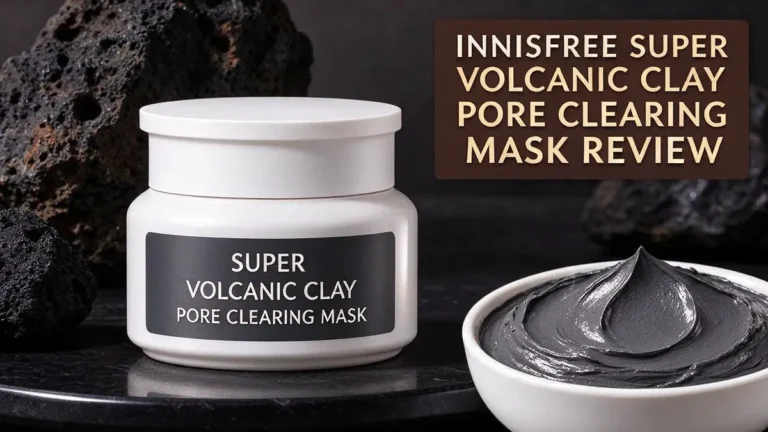
innisfree Super Volcanic Clay Mask

- Aztec Secret Indian Healing Clay is a deep pore cleansing facial, hair and body mask
- 100% Natural Calcium Bentonite Clay that’s great for facials, body wraps, clay baths, foot soaks, hair masks, chilled clay knee packs, insect bites & more
Last update on 2026-08-24 / Affiliate links / Images from Amazon Product Advertising API Some of the links on this website are affiliate links, which means that at no additional cost to you, I earn a commission if you click through and make a purchase. I only recommend products and services that I believe will add value to my readers. Thank you for your support!
Aztec Secret Indian Healing Clay
How to Use the Asarai Red Clay Mask Correctly
Application technique changes your results more than anything else. I learned this the slow way.
Start with clean, dry skin. Cleanse first, then pat your face completely dry, because damp skin thins the mask and weakens the effect.
Squeeze out a small amount, roughly the size of a pea. Spread it with your fingertips in a thin, even layer rather than a thick mud pack.
You should still see your skin faintly through the tint. If the layer looks opaque, you used too much.
Set a timer for 10 minutes. Asarai suggests 3 to 5 minutes for sensitive skin, and that shorter window is smart for a first try.
The mask dries down but never hardens. It stays slightly tacky, so you can talk and blink without feeling shellacked.
Rinse with warm water and a soft washcloth. The red pigment lifts off easily, and it did not stain my sink or my white towel.
Follow immediately with a moisturizer. Wait one to two minutes between products so everything absorbs properly.
Two to three uses per week is the sweet spot. Daily use is unnecessary and increases your chance of irritation, even though some reviewers report using it every day without problems.
My 30 Day Results With the Mask
I used the mask three times per week for four weeks. My skin is combination with an oily T zone and occasional hormonal breakouts.
Week one delivered the instant glow everyone talks about. My face looked brighter and felt genuinely soft, though the effect faded by the next morning.
Week two brought the first real change. My pores across the nose and cheeks looked visibly cleaner, and blackheads were less obvious in harsh bathroom light.
Week three showed the texture improvement. The small rough bumps on my forehead smoothed out, and my foundation stopped clinging to dry patches.
Week four was steady rather than dramatic. My tone looked more even, and one old dark mark faded slightly.
Here is my honest read on the brightening. Some of that immediate radiance comes from the faint warm tint the red clay leaves behind, not purely from active ingredients.
One reviewer on the brand site raised the same point, and I think she is right. The tint fades within an hour, but the smoother texture stays.
I did not stop wearing makeup. I did wear less concealer, and that is a fair and measurable result.
No breakouts appeared during my test. My skin never felt tight, stripped, or sore.
Who Should Buy the Asarai Red Clay Mask?
This mask suits specific people very well and wastes money for others. Let me separate the two groups.
Buy it if you have dry or sensitive skin that reacts badly to traditional clay masks. The aloe base, glycerin, and three plant oils make this one of the most forgiving clay formulas available.
Buy it if dullness is your main complaint. Kakadu plum and the lime extracts target uneven tone directly.
Buy it if you are over 40 and worried about masks making your skin look papery. Several older reviewers specifically praised the mask for adding comfort rather than removing moisture.
Buy it if you want a low effort weekly ritual that takes 10 minutes and leaves a visible result the same day.
Skip it if your skin is very oily and you want serious oil absorption. Kaolin is gentle by design, so a bentonite or charcoal mask will pull more sebum.
Skip it if you are treating active cystic acne. This formula contains no salicylic acid, no benzoyl peroxide, and no sulfur.
Skip it if you have a wheat allergy. The hydrolyzed wheat protein rules it out.
Skip it if your budget is tight. The price to performance ratio is the weakest part of this product.
What the Asarai Red Clay Mask Does Not Do Well
Every honest review needs this section, so here are the flaws I found.
The price is hard to defend. One tube runs about $56 through the official brand site, and Amazon resellers list similar sizes between $27 and $32. You are paying a premium for branding and Australian sourcing, not for rare actives.
The tube design wastes product. The formula is thick and clings to the aluminum walls. Asarai sells a separate metal key to squeeze the tube empty, which means the brand knows about the problem and monetized it instead of fixing it.
Results are temporary. The glow lasts roughly a day. Stop using the mask for two weeks and your skin returns to baseline, because clay masks do not remodel skin the way retinoids or acids do.
It will not fade melasma or deep hyperpigmentation. One reviewer with melasma confirmed the mask did nothing for her pigment, and she still liked it for comfort.
A minority of users react. One buyer reported acne like irritation on the fourth use despite having non sensitive skin. That is uncommon, but it is real feedback rather than a hypothetical.
The narrow nozzle makes portioning awkward. Expect to waste product during your first few uses while you learn the right amount.
The red tint transfers. Keep it off light colored bath towels and pale shirt collars.
Pros and Cons of the Asarai Red Clay Mask
Here is the balanced summary in list form.
Pros
- The texture is genuinely different from other clay masks. It spreads like whipped mousse and never cracks, tightens, or flakes during wear.
- Sensitive skin tolerates it unusually well thanks to aloe, glycerin, and gentle kaolin instead of harsh bentonite.
- The brightening effect appears the same day, which makes it a reliable choice before an event or a photo.
- The ingredient list is short, alcohol free, fragrance free, and vegan, so it fits most clean beauty preferences.
- Rinsing takes seconds with a warm washcloth, and the clay does not stain porcelain.
- Gluconolactone adds gentle PHA exfoliation without sun sensitivity, which is a smart formulation choice.
- Packaging is recyclable aluminum with minimal outer waste.
Cons
- The price sits far above comparable clay masks with similar core ingredients.
- The aluminum tube traps product, and the fix costs extra.
- Oil control is mild, so very oily skin may find it underwhelming.
- It contains hydrolyzed wheat protein, which excludes people with wheat allergies.
- Benefits fade quickly once you stop using it.
- The red tint can transfer to towels and clothing.
- Marketing promises about ditching makeup overstate what any 10 minute mask can deliver.
Price and Value in 2026
Let me lay out the numbers so you can judge for yourself.
The official Asarai site prices a single tube at $56 for a one month supply. Bundles cut that cost, with a two tube pack near $97 and a three tube pack near $133.
A subscription drops the price to about $42 per month. That is the cheapest official route.
Amazon listings from third party sellers show the same size between $27 and $32, sometimes with a 10 percent coupon. Availability shifts often, and seller authenticity varies, so check ratings before buying.
Now compare that to the market. A quality drugstore clay mask costs $8 to $15, and a large tub of bentonite clay costs under $15 and lasts months.
So is the premium worth it? The answer depends on your skin type.
If standard clay masks leave your face raw and tight, this formula solves a real problem and the cost buys you comfort. If your skin handles regular clay fine, you are paying mostly for texture and branding.
My honest position is this. The mask is good, not magical, and the value case works best at subscription pricing or during a sale.
Asarai Red Clay Mask vs Other Clay Masks
A direct comparison clears up a lot of confusion.
Against Aztec Secret Indian Healing Clay, Asarai wins on comfort and loses on power. Aztec uses pure calcium bentonite, pulls far more oil, costs a fraction as much, and leaves many people red and tight for an hour.
Against innisfree Super Volcanic Clay Mask, the gap narrows. Innisfree includes AHA and targets oil control and pore cleansing directly, and it costs roughly a third as much.
Against ADEUS Australian Red Clay Brightening Mask, the formulas look similar on paper. Both use Australian red clay with Kakadu plum and desert lime, and the ADEUS option sits at a much lower price point.
Against Kiehl’s Rare Earth Deep Pore Cleansing Masque, Asarai feels gentler while Kiehl’s absorbs more sebum with Amazonian white clay.
The pattern is consistent. Asarai occupies the gentle luxury corner of the clay mask category.
You buy it for the sensory experience and the kindness to your barrier. You buy the alternatives for stronger oil control or better value.
Nobody needs both. Pick the lane that matches your skin.
What Real Customers Say
Aggregated feedback tells a clearer story than any single review, including mine.
The brand site shows an average rating near 4.6 from more than 4,200 reviews. Roughly 39 percent of comments mention skin brightness, and about 21 percent praise how the product feels.
A 60 year old reviewer named Laura wrote that the mask did not dry out her skin like other clay masks, and that her pores looked reduced.
Another buyer, Katie, reported smaller pores and more even tone after a couple of weeks. She specifically recommended it for people with rough, textured skin.
Aramara, who deals with melasma and highly sensitive skin, said the mask never stung and left her skin soothed. She also confirmed it did not erase her pigmentation.
The negative reviews cluster around two themes. Some buyers see no measurable change, and a smaller group experiences bumps or irritation.
Ekaterina gave two stars after four uses, citing no visible benefit and then acne like irritation.
Independent bloggers land in the middle. One long time reviewer called it effective for brightening and smoothing while describing it as pricier and less powerful than cheaper options.
That mix of enthusiasm and skepticism matches my own experience closely.
Final Verdict: Should You Buy It in 2026?
The Asarai Red Clay Mask earns a cautious recommendation from me.
The formula genuinely delivers on comfort. It brightens, smooths texture, and cleans pores without the tight, stripped feeling that ruins most clay masks.
The problem is price. You can find similar Australian red clay formulas with Kakadu plum for a third of the cost.
Buy it if your skin is dry, sensitive, or mature, and if past clay masks left you red and uncomfortable. In that case the extra money buys you a mask you will actually keep using.
Skip it if you want strong oil control, acne treatment, or pigment correction. Those goals need different products entirely.
My rating is 4 out of 5 for the product and 3 out of 5 for the value.
Start with a single tube rather than a bundle. Patch test on your jawline, use a thin layer, and give it three weeks before you judge.
If it works, subscribe and save. If it does not, one of the three alternatives above will serve you better for less.
Frequently Asked Questions
How often should I use the Asarai Red Clay Mask?
Use it two to three times per week. Asarai confirms that some customers use it daily, but weekly use of two or three sessions gives you the benefits without raising irritation risk. Sensitive skin should start with once per week.
Does the Asarai Red Clay Mask work on acne?
It helps mildly with congestion and blackheads because the clays absorb oil and unclog pores. It contains no salicylic acid or benzoyl peroxide, so it will not treat active or cystic acne. Treat this as a supporting product, not a spot treatment.
Is the Asarai Red Clay Mask safe for sensitive skin?
Most sensitive skin users tolerate it well. Aloe leads the ingredient list and the formula is alcohol free and fragrance free. Limit wear time to 3 to 5 minutes and patch test on your jawline first.
Will the red clay stain my skin or towels?
The tint rinses off skin with warm water and a washcloth. It can transfer to light colored fabric, so use a dark towel. My porcelain sink showed no staining after a month.
Can I leave the mask on longer than 15 minutes?
Yes, but you gain nothing. Asarai confirms the mask can stay on longer and simply needs extra cleanser to remove. Ten minutes covers the useful window.
Does the Asarai Red Clay Mask fade dark spots?
It brightens overall tone and may lighten shallow marks over several weeks. Kakadu plum provides plant based vitamin C, which supports even tone. It will not clear melasma or deep pigmentation.
How long does one tube last?
A 100 ml tube lasts roughly one month with three uses per week when you apply thin layers. Heavy application cuts that to two or three weeks. The metal turn key helps you reach the last portion.
Is the mask vegan and cruelty free?
Yes, the formula is vegan and contains no animal ingredients. It is also alcohol free and free of added fragrance and essential oils. It does contain hydrolyzed wheat protein, so it is not suitable for wheat allergies.
Where can I buy the Asarai Red Clay Mask?
The official Asarai site sells it directly with subscription discounts. Amazon carries third party listings at lower prices, though stock and seller quality vary. Check seller ratings before ordering.

Meet Liora Sage, the trusted voice behind Verity Vault, where honest product reviews meet practical consumer guidance. With a passion for helping shoppers make informed decisions, Liora dives deep into Amazon’s vast marketplace to uncover the truth about products across multiple categories.